Counseling for Veterans

The mission ends, but the experiences remain.
For many veterans, military service changes you in ways that are difficult to explain to people who haven’t lived it.
You were trained to operate in environments where focus, discipline, and quick decision-making mattered. That taught you to rely on the people beside you and to push through situations that demanded strength and resilience.
Those experiences become part of who you are. Still, when the structure of military life ends, and you transition back into civilian life, things don’t always settle into place as easily as people expect.
Most people don’t see the adjustment required.
From the outside, people may assume things are back to normal.
You’re home and moved forward with work, school, or family life. Internally, however, things can feel different.
Certain memories still surface unexpectedly. Relaxation or sleeping deeply may be harder to attain. You might feel more on edge than you used to.
Sometimes it shows up in relationships. The people around you care about you, but they may not fully understand what your experiences were like or how those experiences still affect you today.
It’s often the accumulation of experiences.
Many veterans carry more than one difficult experience from their time in service.
Training environments, deployments, high-stress operations, and the constant need to stay alert can take a toll over time. Even years later, certain sounds, memories, or situations can bring those experiences back into focus.
You may also notice something else. The habits that once helped you succeed in the military, such as staying guarded, staying alert, and pushing through stress, can make it harder to slow down or fully relax in civilian life.
Explaining to others how you feel is challenging.

In this space, you don’t need to explain.
One of the concerns many veterans have about therapy is whether the therapist will truly understand military culture. They wonder if they’ll have to explain the basics of the job, the structure of service life, or the realities of deployment.
Before becoming a counselor, I served in the United States Army and later spent 26 years as a firefighter and paramedic.
Because of that background, many veterans tell me they feel more comfortable knowing they can talk openly about their experiences without worrying about being misunderstood.
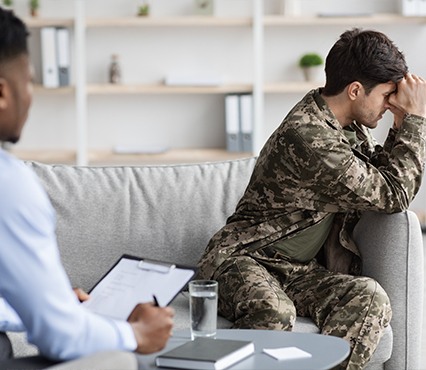
Here’s how therapy with me can help.
I strive to provide a space where you can begin making sense of the experiences you’ve carried with you since your time in service.
Sometimes that involves talking through specific memories that still feel unresolved; other times, the focus is on helping your mind and body step out of the constant alertness that military environments often require.
As the work progresses, many veterans begin to notice changes. Sleep becomes more consistent, stress reactions become easier to manage, and relationships start to feel more connected again.
Many people also rediscover parts of themselves that may have felt distant since leaving the military.
Move forward without leaving the past behind.
Your service, experiences, and lessons are all part of who you are. Therefore, the goal of therapy isn’t to erase your past. It’s about helping those experiences take their place in your life without continuing to control how you feel.
My goal is to provide a space where you can make sense of your experiences and process negative experiences. Depending on your needs, I will use therapeutic approaches like EMDR to help you process potential trauma, and I will provide you with the tools to overcome the stress and uncertainty you feel as you gain more resilience.
Many veterans find that once they’ve processed what they’ve been through, they’re able to move forward with greater clarity, stability, and purpose.
The good news is that through therapy, you can improve your sleep, manage stress, and establish meaningful relationships with those you love.
Let’s work to make this transition easier.
If your experiences during military service continue to affect your life today, support is available.
Therapy can help you process those experiences and regain a sense of balance moving forward.
If you’d like to learn more about how this process works, I invite you to reach out and schedule a consultation.
Take the first step to feeling like yourself again.
You don't have to keep carrying these experiences and feelings alone. Therapy can help you process what you've experienced, regain balance, and move forward with greater clarity and resilience. Contact me today for a free consultation. It's a no-pressure conversation where I'll answer any questions and learn more about what's weighing on you. Together, we can find a path forward.
Schedule Your Free 15-Minute Consultation